Mole Paste Ingredients: What Goes Into a Mole Base
Learn what goes into a mole base: dried chiles, nuts and seeds, spices, chocolate, bread and tortilla, and how each one shapes the paste.

Contents
- Dried chiles are the backbone of the base
- Nuts and seeds give the paste its body
- Spices and aromatics build the aroma layer
- Bread, tortilla and sugar round out the paste
- Where chocolate fits in mole ingredients
- The full ingredient list by family
- How many ingredients a mole base holds
- Mole ingredients in English and in Spanish
- Reading a store-bought mole paste
- Questions About Mole Paste Ingredients
- What are the main mole paste ingredients?
- Does mole always contain chocolate?
- How many ingredients does a mole base have?
- What are mole ingredients called in Spanish?
- Can I substitute ingredients in a mole paste?
A mole paste is a ground blend of toasted ingredients, and its base almost always starts with dried chiles. Around those chiles sit nuts and seeds, spices, aromatics, and something starchy or sweet such as bread, tortilla, chocolate or sugar. Each family of ingredients does a distinct job in the paste, and that job explains why a mole tastes the way it does.
- Dried chiles give a mole base its color, body and much of its heat.
- Nuts and seeds add thickness and richness to the ground paste.
- Spices and aromatics build the aroma layer of the blend.
- Bread, tortilla and sugar thicken the paste and round out its edges.
- Chocolate is one ingredient among many, not the definition of mole.
Dried chiles are the backbone of the base
Dried chiles supply the color, the body and much of the flavor of a mole paste. A mole base ingredients list reads as a chile list first, because the fruit carries the paste.
Chiles are toasted or fried before grinding, and that step changes the paste a lot. A chile taken too far turns bitter, and the bitterness spreads through the whole batch.
Different dried chiles pull the paste in different directions, from smoky and dark to bright and fruity. The mix of chiles you choose is the single largest decision in the base.
Nuts and seeds give the paste its body
Nuts and seeds are the thickeners and richness of a mole base, and they sit beside the chiles in nearly every version. Almonds, peanuts, sesame, pumpkin seeds and walnuts appear across regional blends.
The seeds and nuts are toasted lightly and ground with the chiles into mole paste. Sesame in particular adds a nutty edge that reads clearly even in a dark, chile-heavy paste.
The proportion of nuts and seeds affects texture as much as flavor. A base heavy on seeds grinds into a denser paste, and that density carries through to the finished sauce.
Spices and aromatics build the aroma layer
Spices and aromatics form the aroma layer of a mole base, the part you smell before you taste. Cinnamon, cloves, black pepper, anise and cumin appear in many blends.
Aromatics such as garlic, onion and sometimes tomato are cooked down and ground in with the rest. These ingredients soften the sharper chile notes and connect the paste to the kitchen it comes from.
Spices are potent in small amounts, and a mole paste can turn harsh when they dominate. Ground spices go in sparingly so the chile and nuts keep the lead.
Bread, tortilla and sugar round out the paste
Tortilla and bread are fried and ground into the base as thickeners, and they also add a toasted grain note. Sugar balances the bitterness of toasted chiles and the bite of spices.
The starchy ingredients give a mole paste its ability to coat food once it is loosened with broth. Without them, the paste can separate and taste thin.
Sugar belongs in small amounts, and its job is balance rather than sweetness. A paste that tastes sweet first has too much sugar for most savory dishes.
Where chocolate fits in mole ingredients
Chocolate is one ingredient in mole, not the ingredient that defines it. Mole ingredients with chocolate appear across regional styles, but plenty of moles carry no chocolate at all.
When chocolate goes in, it adds color, a little bitterness and a smooth finish to the paste. The chocolate used is often dark and lightly sweetened rather than a dessert bar.
Chocolate joins the base near the end of cooking, after the chiles, nuts and spices are ground. Its flavor sits on top of the chile base rather than replacing it.
The full ingredient list by family
A mole base ingredients list groups into a handful of families, and the families matter more than any single item. The chile family sets color and heat, while the nut and seed family sets richness.
The spice family sets aroma, the starchy family sets thickness, and the sweet family sets balance. Aromatic vegetables and sometimes fruit fill out the middle of the blend.
Reading a pasted mole label through these families tells you what the paste will do in the pot. A label heavy on chiles and seeds promises a dense, savory base.
| Ingredient family | Job in the paste | Examples |
|---|---|---|
| Dried chiles | Color, heat, body | Ancho, pasilla, guajillo |
| Nuts and seeds | Thickness and richness | Almonds, sesame, pumpkin seeds |
| Spices | Aroma | Cinnamon, cloves, pepper, anise |
| Starch | Thickening and toasting | Bread, tortilla |
| Sweet and chocolate | Balance and finish | Sugar, dark chocolate |
How many ingredients a mole base holds
Mole ingredients how many a base holds depends on the recipe and the region, and a mole paste can run from a short list to a long one. Some blends stay close to chiles, seeds and spices.
Longer blends add more chile types, more seeds, fruit, herbs and several starches. Each addition is there to shift color, texture or balance in a specific direction.
A long list is not automatically a better paste, and a short list is not automatically thin. The count matters less than whether each ingredient has a job in the blend.
Mole ingredients in English and in Spanish
Mole ingredients in English and in Spanish name the same pantry, so learning both helps you read labels and recipes. Dried chiles become chiles secos, and nuts and seeds become frutos secos y semillas.
Spices translate as especias, bread as pan, and tortilla stays tortilla. Chocolate stays chocolate, and sugar becomes azúcar in a Spanish ingredient list.
Spanish labels also name chiles by their regional names, such as chile ancho or chile mulato. Knowing the family each name belongs to lets you substitute with confidence.
- chiles secos: dried chiles
- frutos secos: nuts
- semillas: seeds
- especias: spices
- pan: bread
- azúcar: sugar
- chocolate: chocolate
Reading a store-bought mole paste
Store-bought mole paste ingredients follow the same families, and the label order tells you which family leads. The first ingredients listed carry the largest share of the paste.
A paste that lists chiles and seeds first will taste dense and savory. A paste that lists sugar high on the label will lean sweet in the finished sauce.
Labels also list preservatives and added fats that home blends do not use. Reading the full list helps you match the paste to the dish you have in mind.
Questions About Mole Paste Ingredients
What are the main mole paste ingredients?
The main mole paste ingredients fall into five families: dried chiles, nuts and seeds, spices, starchy thickeners such as bread or tortilla, and a sweet or chocolate element. Aromatics like garlic and onion often join the blend. Each family does a distinct job in the paste.
Does mole always contain chocolate?
No, mole does not always contain chocolate, and many regional blends leave it out. Chocolate appears in some moles as one ingredient among many. The chiles, nuts and spices define the paste far more than chocolate does.
How many ingredients does a mole base have?
A mole base can hold a short list or a long one, depending on the recipe and the region. Longer blends add more chile types, seeds, spices and starches. The count matters less than whether each ingredient has a clear job in the blend.
What are mole ingredients called in Spanish?
In Spanish, mole ingredients are named by family: chiles secos for dried chiles, frutos secos y semillas for nuts and seeds, and especias for spices. Bread is pan, sugar is azúcar, and chocolate stays chocolate. Regional chile names such as chile ancho and chile mulato appear on labels.
Can I substitute ingredients in a mole paste?
Yes, you can substitute within an ingredient family rather than across families. Swap one dried chile for another of similar character, or one seed for another. Keep the balance of chile, nut, spice and starch intact so the paste still works.
Read next
-
 Vegetarian Pipián Verde Recipe
-
 Advanced Mole Techniques
-
 Mole Tacos in Buenos Aires: A Flavour Guide for Taco Night
-
 Finding and Ordering Mole Tacos Near You
-
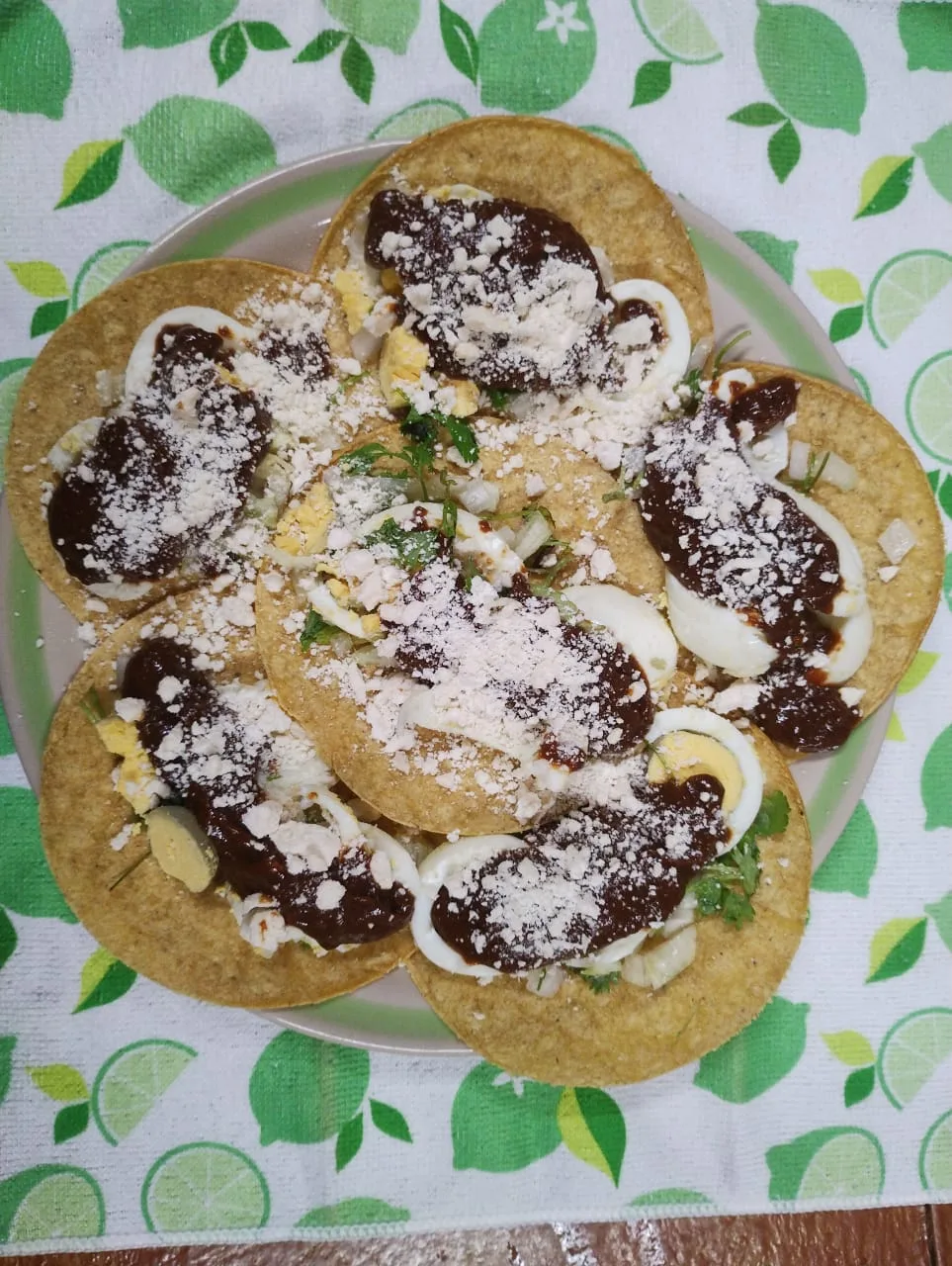 Mole Tacos: Sauce, Chicken Filling and Toppings for a Flavorful Taco Night
-
 Mole Tacos at the Minnesota State Fair
-
 Pipián Sauce: What It Is and How to Make It
-
 Vegetarian and Vegan Mole: Sauce Recipes and Meat-Free Dishes
-
 How to Prepare Mexican Mole Using Doña María
-
 How to Make Mexican Mole from Scratch: Ingredients and Recipe Variations